Introduction
Investment Casting Process, is also known as the lost-wax process, is one of the oldest metal-forming techniques and remains popular due to its accuracy and versatility. It allows manufacturers to create detailed, thin-walled components that need precise dimensions and a smooth surface finish. Due to these advantages it is utilized across a broad range of industries that include defense, aerospace, automotive industrial machinery, medical equipment, in any application in which tight tolerances and dependability are essential.
At Custiv, we provide complete investment casting service built on DFM practices, well control foundry processes and accurate post-casting machining. Our approach ensures every component is manufactured to consistently high level of performance and quality
What Is Investment Casting?
Investment casting, sometimes referred to as the lost-wax casting process, is a precision manufacturing technique used to create intricate and intricate metal parts. It is frequently chosen for parts that need fine surface finishes, thin walls, complex shapes, and tight tolerances that are challenging to accomplish using traditional methods like sand casting.

How the Investment Casting Process Works
The uniqueness of ceramic shell casting lies in its mold-making technique, which ensures exceptional accuracy and repeatability. The process typically includes the following steps:
Making the Wax Pattern A detailed wax model is made that perfectly matches the shape of the final part. The whole process is based on this pattern.
Making the Ceramic Shell The wax model is dipped into a fine ceramic slurry that is made of colloidal silica and alumina over and over again. To make a strong ceramic shell around the wax pattern, each layer is dried.
Getting rid of the wax (lost-wax stage) After the ceramic shell is done, it goes into an oven to get hot. This melt and drains the wax, leaving a hollow ceramic mold. This step is crucial to the entire method, and it’s the reason the technique is known as lost-wax casting.
Pouring and solidifying metal The original wax pattern is formed by pouring molten metal into the ceramic mold. The final cast component is exposed when the ceramic shell breaks off after the metal solidifies.
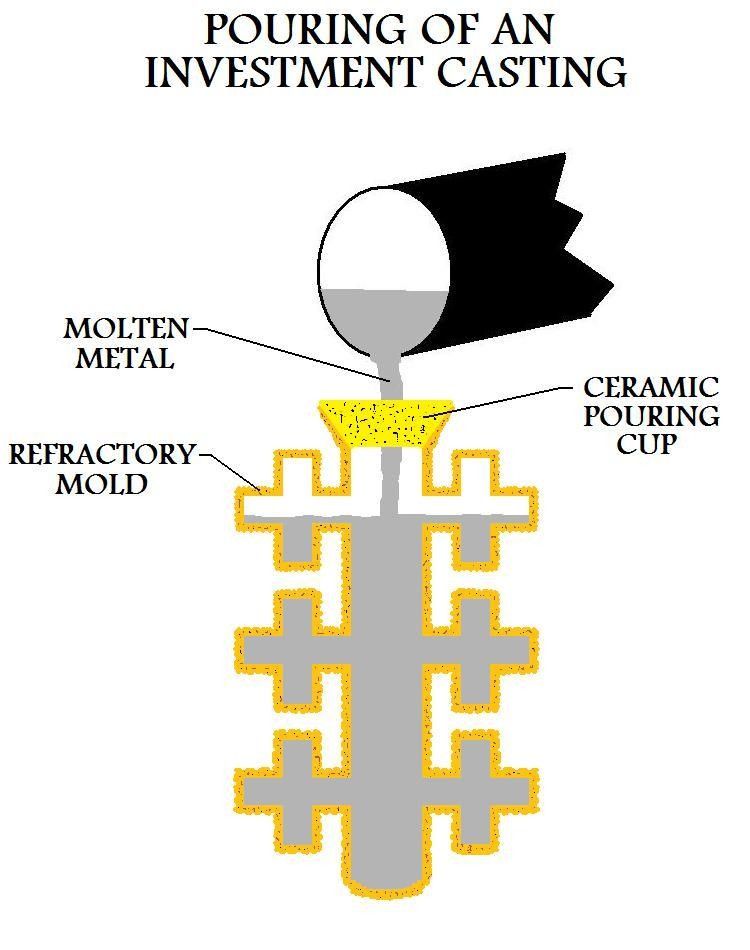
From the creation of wax patterns to the creation of ceramic shells and final pouring, Custiv's casting services guarantee that every step is carried out with excellent metallurgical consistency and repeatability. 🔗 https://www.custiv.com/service/casting-services
Materials Used in Investment Casting Process
Investment casting companies work with many different types of metal alloys, such as: • Copper alloys • Aluminum alloys • Low-alloy and carbon steels • Stainless steels • Tool steels • Nickel-based superalloys • Cobalt-based alloys This method works best for metals that are hard to machine or shape with other methods.
Advantages of Investment Casting:
Investment casting offers unique benefits that make it one of the most preferred methods for precision metal components.
Exceptional Surface Finish & Accuracy The wax-pattern-based mold provides a smooth finish with 1.3 – 0.4 microns RMS, eliminating parting lines and reducing machining time.
High Dimensional Precision Undercuts, thin walls, fine contours, blind holes, and intricate shapes can be cast accurately. Components requiring higher tolerances need significantly less post-machining.
Complex Design Capabilities Investment casting can produce shapes that even CNC machining or forging cannot easily achieve. Complex interior structures can be made using ceramic and wax cores.
Consistent Mechanical Performance The process is trusted for aerospace turbine blades, demanding high strength, heat resistance, and reliability.
Scalable Production Rates Production rates can reach up to 1000 parts/hour, depending on size and geometry.
Thin-Walled Precision Sections as thin as 0.40 mm can be produced without cold-shut defects.
Material Versatility Ideal for high-melting-point alloys that cannot be cast using plaster or metal molding methods.
Reduced Tooling & Finishing Costs • No flash • Minimal gates • Low finishing operations • High material utilization
Overall, investment casting provides exceptional accuracy, reduced machining effort, and reliable performance.
Manufacturers looking for reliable production can leverage Custiv’s precision casting capabilities, which reduce machining time, improve tolerance control, and ensure consistent surface quality.
🔗 https://www.custiv.com/service/casting-services
Types of Investment Casting: Material Options:
metal casting companies offer multiple alloy choices, based on application, cost, and performance needs.
Stainless Steel Stainless steel offers exceptional, long-lasting durability and excellent resistance to corrosion. It is widely used in aerospace, medical, and industrial components.
Low-Alloy Steel Known for its excellent mechanical properties and affordability, low-alloy steel can be heat-treated to achieve specific hardness and strength levels.
Aluminium Alloy Lightweight and corrosion-resistant, aluminium is preferred in aerospace, defense, electronics, and automotive applications.
Carbon Steel Carbon steel is strong, ductile, and cost-effective, making it one of the most widely used alloys globally.
Superalloy Superalloys (nickel-based, cobalt-based) offer exceptional heat resistance, oxidation resistance, and mechanical strength, commonly used in: • Gas turbines • Jet engines • Energy sector • Chemical plants
DFM Guidelines for Investment Casting Components:
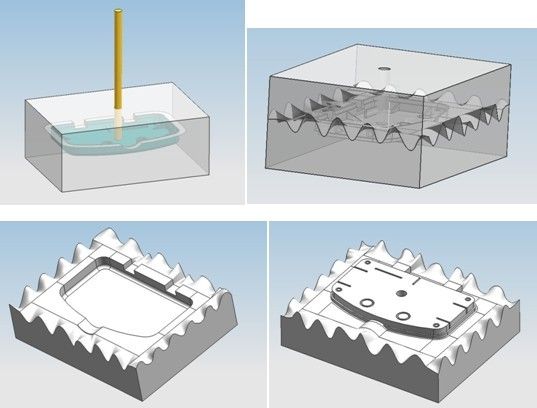
A precision casting company adheres to the DFM guidelines for the metal casting die.
• To prevent stress from concentrating beware of sharp edges.
• Through the entire design, maintain the same thickness of wall.
• When possible, choose large filets.
• Standard tolerances are not required; do not over-specify tolerances.
• Utilize the ANSI Y14.5M standards to identify tools and dates.
• The size will depend on the part, make sure to make sure that the allowance for machining is between 0.25 to 0.75 millimeters.
• If needed, create an adequate draft that is that is based on the layout of the wax design.
• Due to their ability to distort long, thin pieces should be kept away from.
• Excellent for precise applications using slim walls.
Before production starts, Custiv's engineering team conducts a thorough DFM analysis to verify tolerance requirements, fillet design, pattern uniformity, and machining allowances.
🔗 https://www.custiv.com/service/casting-services
Conclusion:
The investment casting process continues to play a crucial role in precision manufacturing, because it provides unparalleled design flexibility, surface finish, and dimensional accuracy, the investment casting process is still essential to precision manufacturing. It acts as a link between scalable mass production and complex design. Our specialty at Custiv is providing high-performance cast components supported by precise post-processing solutions. As metal casting service providers, we also provide services in die casting and sand casting suitable for various applications.
Our network of manufacturing integrated ensures efficiency, quality and consistency whether you're looking for models or production on a large scale.
Connect with Custiv for a comprehensive overview of Custiv's manufacturing and casting possibilities.